Winter in South Africa is deceiving. While our Winters aren’t Arctic-level cold, the drop in temperature — especially overnight and in places like Johannesburg, the Drakensberg, and the Western Cape — can genuinely affect your dog’s health and comfort. Throw load shedding into the mix, and those cold nights with no heating become a real problem for your four-legged family member.
The good news? Keeping your dog warm this Winter doesn’t require expensive solutions. It just requires knowing what to look for and a few smart adjustments to their routine.
This guide covers everything South African dog owners need to know — from spotting the signs that your dog is too cold, to the best locally available products to keep them cosy through June and July.
Do Dogs Actually Get Cold in South Africa?
Short answer: yes — and more easily than most owners realise.
Dogs regulate their body temperature differently from humans, and while their coat provides some insulation, it’s rarely enough on its own during a South African Winter. Factors that increase cold sensitivity include:
- Short or thin coats — Greyhounds, Whippets, Pitbulls, Boxers, and Dachshunds have minimal insulation
- Small body size — smaller dogs lose heat faster due to a larger surface-area-to-body-mass ratio
- Age — puppies and senior dogs have less efficient thermoregulation
- Health conditions — dogs with arthritis, diabetes, heart disease, or hormonal disorders feel the cold more acutely
- Wet conditions — a damp coat loses its insulating properties almost entirely
Even breeds you might assume are cold-hardy — like Labradors or German Shepherds — can struggle if they sleep outdoors or in an unheated space during a South African cold front.
South African context: Our Winters are dry and sunny during the day, which can mask just how cold nights actually get. In Joburg and Pretoria, overnight temperatures regularly drop below 5°C in June and July. In the Cape Winelands and Karoo, temperatures can hit 0°C or below. That’s cold enough to cause real discomfort — and in extreme cases, hypothermia.
5 Signs Your Dog Is Too Cold
Before we get into solutions, know what to watch for. A dog who is too cold will often show these signs:
- Shivering or trembling — the most obvious sign; don’t ignore this
- Tucking their tail and hunching their body — they’re trying to conserve heat
- Lifting paws off cold floors or ground — particularly on tiled floors overnight
- Seeking warmth obsessively — pressing against you, staying near heaters, or burrowing under blankets
- Slowed movement or lethargy — cold affects muscle function and energy levels
If you notice pale or bluish gums, extreme weakness, or your dog becomes unresponsive, seek veterinary attention immediately — these are signs of hypothermia.
8 Ways to Keep Your Dog Warm This Winter
1. Upgrade Their Sleeping Setup
This is the single biggest impact you can make. A dog sleeping on a cold tile floor or in a draughty kennel is burning energy just trying to stay warm — energy that should be going into immunity, digestion, and general health.
What to do:
- Raise their bed off the floor — even a few centimetres makes a significant difference by avoiding cold air pooling at ground level
- Switch to a bed with memory foam or thick orthopedic padding, especially for older dogs
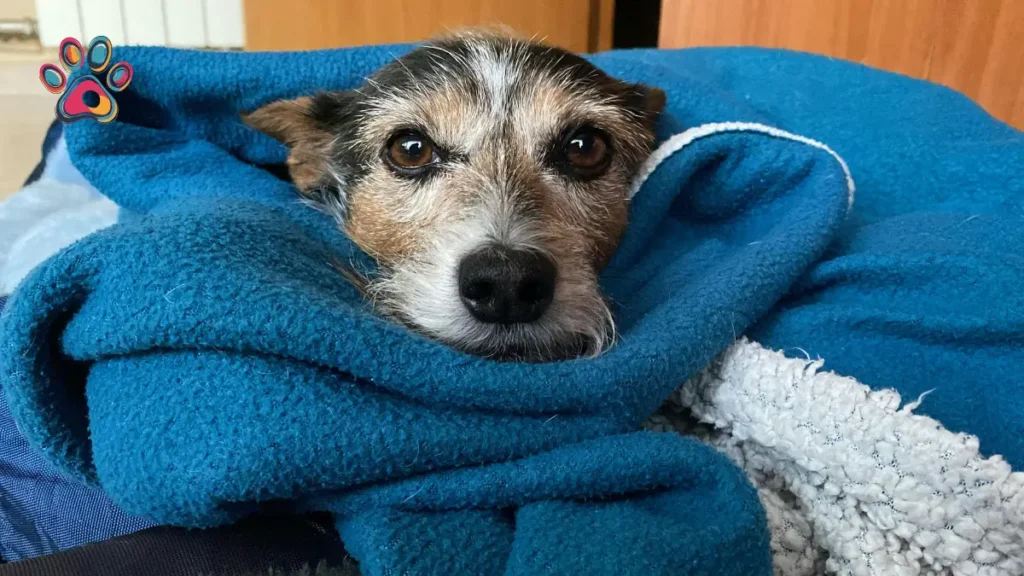
- Add a fleece or wool blanket on top — dogs instinctively burrow, and having something to get under is a comfort they genuinely use
2. Move Their Bed Away from Draughts
Check where your dog sleeps and get down to their level. Draughts from under doors, air conditioning vents, or gaps in walls create a cold current that makes a room feel much colder at floor height than at standing height.
Simple fixes: a draught excluder under the door, repositioning the bed to an interior wall, or placing a cardboard box around three sides of the bed to create a windbreak.
3. Use a Dog Coat for Outdoor Time — And Know When to Skip It
Dog coats are not just a fashion statement. For short-coated, small, or older breeds, a quality fleece or padded dog coat genuinely helps maintain body temperature during walks and outdoor time.
When to use one:
- Morning or evening walks when temperatures are below 10°C
- Any outdoor time for puppies under 6 months or dogs over 8 years
- For breeds with minimal natural insulation (Greyhounds, Staffies, Dachshunds, Chihuahuas)
When to skip it:
- Active dogs who run and play — they generate enough heat naturally
- Thick double-coated breeds like Huskies, Malamutes, or Border Collies
4. Feed a Little More (With Care)
Dogs burn more calories in cold weather because their bodies work harder to maintain core temperature. A slight increase in food portions during Winter — particularly for dogs that spend time outdoors — is completely appropriate.
This is especially relevant if your dog is already on the lean side. Check our [guide to whether your dog is a healthy weight → link to /is-my-pet-overweight] before adjusting portions.
Note: Don’t increase food for overweight or sedentary dogs without vet guidance. The same applies to dogs with medical conditions.
5. Keep Them Active — Even When It’s Cold
The temptation to skip walks in Winter is real, but reduced exercise leads to weight gain, joint stiffness, and behavioural issues. Shorter, more frequent walks are better than skipping entirely.
If outdoor conditions are truly unpleasant, look at indoor enrichment: puzzle feeders, hide-and-seek games, stair work, or basic training drills. A tired dog is a warm dog — activity generates body heat.
6. Protect Their Paws
Cold floors and outdoor surfaces affect paws more than most owners realise. In areas with frost, ice, or very cold paving, dogs can experience cracked paw pads and discomfort.
Solutions:
- Dog booties for outdoor walks (takes some getting used to, but works well)
- Paw balm to prevent cracking and protect the skin barrier — apply before walks
- Wipe paws dry when coming inside — a wet paw on a cold floor loses heat rapidly
7. Consider a Self-Warming Bed
Self-warming pet beds use your dog’s own body heat and require no electricity — they’re a smart, low-maintenance upgrade for any dog sleeping in an unheated room. Particularly useful in garages, utility rooms, or anywhere that doesn’t get central heating overnight.
Look for beds with a reflective inner layer and thick outer insulation. They’re widely available from local pet retailers and last for several seasons with proper care.
8. Keep Vet Appointments — Cold Amplifies Existing Conditions
Winter aggravates arthritis, respiratory conditions, and skin problems in dogs. If your dog has any underlying health issue, schedule a Winter check-up early in the season — before symptoms flare up.
Particularly important for: senior dogs with [joint pain → link to /senior-dog-joint-pain-relief], dogs with a history of respiratory infections, and dogs with thin coats who are prone to skin dryness.
South African-Specific Tips
Highveld Winters (Gauteng, Free State, Mpumalanga): Dry cold with very cold nights — focus on insulated bedding and Winter coats for outdoor dogs. Morning and evening temperatures drop fastest here.
Cape Winters (Western Cape, Eastern Cape coast): Wet and cold — prioritise waterproofing and drying dogs off after walks. Damp fur is significantly colder than dry fur.
KwaZulu-Natal Winters: Milder, but the coast can surprise with cold fronts. Still worth adding a blanket layer for smaller or older dogs.
Highveld Summer dogs in Winter — breeds like Boerboels, Ridgebacks, and Afrikaners are built for the SA climate but still feel overnight cold. Don’t assume they’re fine just because they’re local breeds.
Advanced Tips: Special Cases
Puppies under 6 months: Cannot yet self-regulate body temperature effectively. Keep them indoors at night and in a heated space if possible. Never leave a puppy in a cold kennel overnight.
Senior dogs (8+ years): Winter is when arthritis flares worst. Prioritise a quality orthopedic bed, add joint support supplements if not already using them, and shorten outdoor time in peak cold hours (early morning and after dark). See our [senior dog joint pain guide → link].
Multi-dog households: Dogs in groups can share body heat — but don’t assume that means they’re all warm enough. Each dog still needs adequate bedding of their own.
Dogs that sleep outdoors: Ideally, bring them inside during Winter. If that’s not possible, invest in a well-insulated kennel (raised off the ground, with a door flap, and thick bedding inside), and ensure they have fresh water that isn’t frozen in the mornings.
Frequently Asked Questions
Q: At what temperature should I worry about my dog?
A: As a general guide, dogs are at risk of discomfort below 10°C and genuine danger below 0°C — particularly overnight. Smaller breeds, puppies, seniors, and short-coated dogs need extra care from around 15°C downwards.
Q: Can my dog sleep outside in Winter?
A: It depends on the dog and the conditions. A large, double-coated adult dog in Durban might be fine. A small, short-coated dog in Johannesburg in July is not safe outdoors overnight. When in doubt, bring them inside.
Q: Do I need to change my dog’s food in Winter?
A: Possibly — dogs that spend time outdoors or are on the lean side may benefit from a modest calorie increase. Ask your vet before making changes, especially for dogs with health conditions.
Q: Are dog coats actually useful or just cute?
A: For the right breeds (short-coated, small, elderly, or health-compromised dogs), they’re genuinely useful. For large double-coated breeds, they’re usually unnecessary and can even cause overheating during activity.
Q: My dog doesn’t shiver — does that mean they’re warm enough?
A: Not necessarily. Some dogs suppress shivering. Check for other signs: hunching, seeking warmth, lethargy, or reluctance to go outside. If in doubt, feel their ears and paws — if they’re noticeably cold to the touch, your dog is cold.
Conclusion
Keeping your dog warm this Winter is about knowing your dog — their breed, age, health status, and sleeping situation — and making thoughtful adjustments rather than expensive ones. A quality bed, a good blanket, a slightly increased meal, and a mindful eye on the overnight temperature is often all it takes.
Got a load shedding tip that works for your dog? Drop it in the comments — we’d love to hear what’s working for SA pet parents this Winter.
→ [Download our FREE 2026 SA Pet Parent Seasonal Pet Care Guide]— it includes a seasonal care checklist for all four seasons, vet-approved feeding guides, and product recommendations tailored to South Africa.